The cell cycle is the fundamental process by which cells grow, replicate their DNA, and divide into new daughter cells. It ensures that genetic material is copied accurately and distributed equally, maintaining stability across generations of cells.
Understanding the phases of the cell cycle is crucial in fields like genetics. Knowing the checkpoints and molecular regulators is important in biochemistry, cancer research, and medicine.
What is the Cell Cycle?
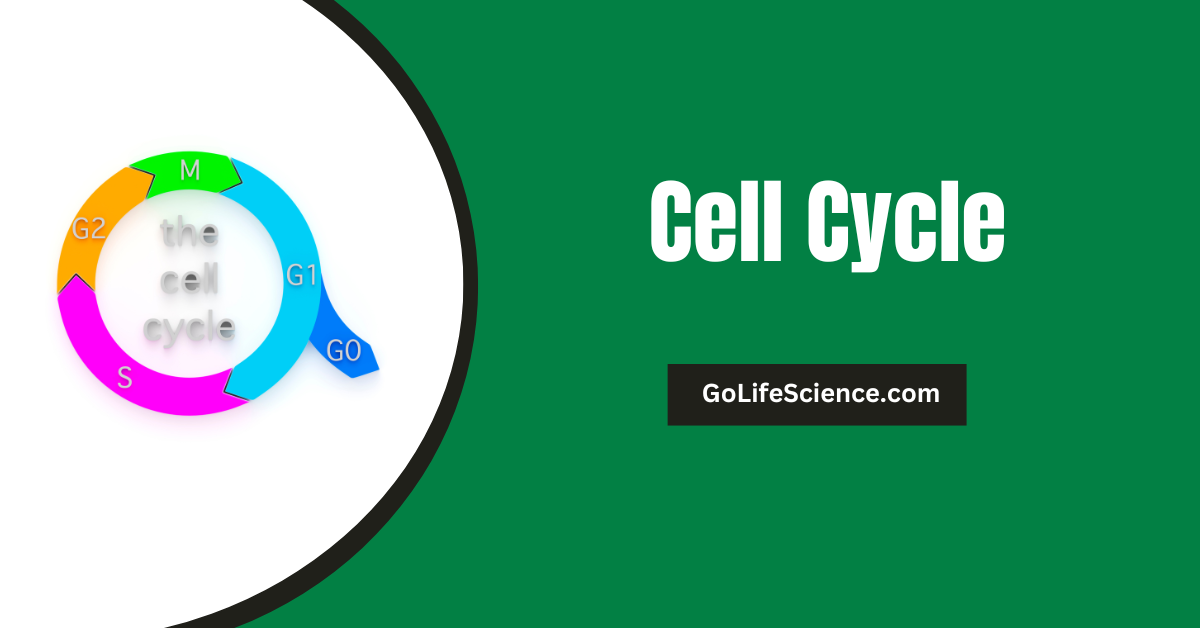
The cell cycle refers to the series of ordered events that lead to cell growth, DNA replication, and cell division. In eukaryotic cells, it is divided into interphase (G1, S, G2) and M phase (mitosis + cytokinesis).
Cells that are not actively dividing may enter a quiescent phase (G0). In this phase, they remain metabolically active but do not replicate.
Phases of the Cell Cycle
The cell cycle is a highly organized sequence of events that cells undergo as they grow and divide. It is divided into distinct phases, each with specific functions and checkpoints to ensure proper progression.
Understanding the cell cycle phases is crucial for comprehending how cells replicate and maintain genetic stability.

Below, we provide an in-depth exploration of each phase. This includes interphase, which comprises the G1 phase, S phase, and G2 phase. It also covers the mitotic phase with mitosis and cytokinesis.
The eukaryotic cell cycle consists of tightly regulated stages:
1. Interphase: The Preparation Phase
Interphase is the longest stage of the cell cycle, accounting for approximately 90% of the cycle’s duration. During this phase, the cell grows, performs its normal functions, and prepares for division. Interphase is divided into three sub-phases: G1 phase, S phase, and G2 phase.
a. G1 Phase (Gap 1)
The G1 phase is the first stage of interphase and marks a period of intense metabolic activity. During this time:
- The cell increases in size and actively produces RNA, enzymes, and proteins required for growth.
- Organelles such as mitochondria and ribosomes also multiply to support future cell division.
- At the restriction point (R-point), the cell decides whether to continue into the next phase. Alternatively, it may enter a resting stage (G0 phase). This checkpoint ensures only healthy cells proceed further.
- Growth factors, nutrients, and external signals strongly influence this stage.
b. S Phase (Synthesis Phase)
The S phase is dedicated to DNA duplication.
- Each chromosome is replicated at multiple origins of replication, ensuring the genome is copied quickly and accurately.
- Alongside DNA synthesis, histone proteins are produced and assembled into nucleosomes to package the newly formed DNA into chromatin.
- The formation and stability of replication forks are tightly regulated to prevent errors or DNA breaks, which could cause mutations.
- By the end of S phase, every chromosome consists of two identical sister chromatids joined at the centromere.
c. G2 Phase (Gap 2)
The G2 phase is the final preparation stage before mitosis.
- The cell undergoes a second round of growth and protein synthesis, especially for proteins involved in mitotic spindle formation.
- Organelles such as the Golgi apparatus and endoplasmic reticulum also prepare for division.
- Crucially, the cell performs a DNA damage checkpoint:
- It checks whether all DNA has been completely replicated.
- It repairs any damage before moving forward.
- This phase ensures that cells enter mitosis only when conditions are favorable.
2. M Phase (Mitosis and Cytokinesis)
The M phase of the cell cycle is the most dynamic and visually striking stage. The cell undergoes mitosis and cytokinesis during this phase. This results in the production of two identical daughter cells. This phase follows the interphase stages (G1, S, and G2).
It ensures that the chromosomes duplicated during the S phase of the cell cycle are divided and distributed accurately. The M phase does not focus on preparation steps.
Instead, it centers on the actual division of the nucleus and cytoplasm. This phase is the highlight of the cell division cycle.
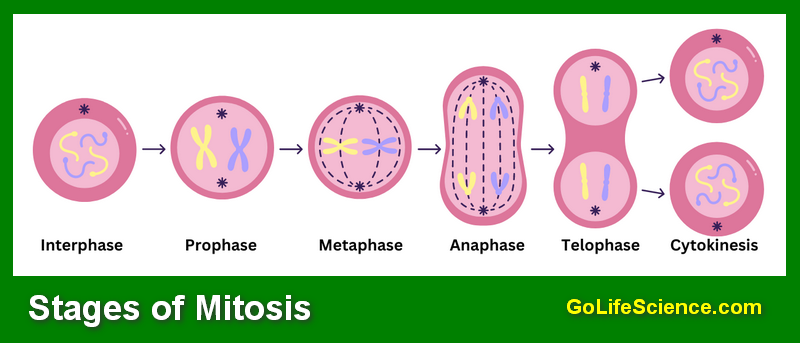
Mitosis itself is divided into five main stages. These are prophase, prometaphase, metaphase, anaphase, and telophase. This process is followed by cytokinesis, which completes the physical separation of the cell. These processes work together to ensure cell cycle regulation.
They ensure the proper distribution of genetic material. They also preserve cell cycle checkpoints that maintain genomic stability.
The M phase has two major events: mitosis (nuclear division) and cytokinesis (cytoplasmic division).
Mitosis (nuclear division):
- Prophase: Chromosomes condense, spindle fibers begin to form, and the nuclear envelope starts breaking down.
- Metaphase: Chromosomes align along the cell’s equatorial plate (metaphase plate).
- Anaphase: Sister chromatids are pulled apart toward opposite poles of the cell.
- Telophase: Nuclear envelopes re-form around separated chromosomes, which begin to decondense.
Cytokinesis (cytoplasmic division):
- In animal cells, a cleavage furrow forms and pinches the cell into two.
- In plant cells, a cell plate develops into a new cell wall between daughter cells.
- The result is two genetically identical daughter cells, each with the same DNA content as the parent cell.
a. Mitosis (Nuclear Division)
Mitosis ensures that each daughter cell receives the exact same set of chromosomes, preserving genetic stability. It is divided into four well-defined stages:
1. Prophase
During prophase, the chromatin condenses into visible chromosomes, each consisting of two sister chromatids joined at a centromere. The spindle fibers begin to form, extending from the centrosomes that move toward opposite poles of the cell. At this stage, cell cycle regulation ensures that the transition occurs smoothly. It guarantees that the chromosomes are correctly prepared for alignment.
2. Prometaphase
In prometaphase, the nuclear envelope breaks down, allowing the spindle fibers to interact directly with the chromosomes. Special protein structures called kinetochores form at the centromeres, attaching chromosomes to the spindle. This step is crucial for accurate cell cycle stages. Improper attachments can cause cell cycle regulation errors and chromosomal instability.
3. Metaphase
Metaphase is marked by the alignment of all chromosomes. They align at the metaphase plate, an imaginary line equidistant from the cell’s poles. This arrangement ensures equal distribution of genetic material. The cell cycle checkpoints are crucial here. They verify that each chromosome is correctly attached to spindle fibers. This verification occurs before the cell proceeds to anaphase. This step is essential for safeguarding the accuracy of the mitotic cell cycle.
4. Anaphase
Once the checkpoints are cleared, the sister chromatids are pulled apart toward opposite poles of the cell. This separation is facilitated by the shortening of spindle fibers. Anaphase ensures that each daughter cell receives an identical set of chromosomes. It reinforces the importance of cell cycle regulation during the M phase of the cell cycle.
5. Telophase
In telophase, the chromosomes reach the poles and begin to de-condense back into chromatin. The nuclear envelope reforms around each set of chromosomes, resulting in the re-establishment of two distinct nuclei. By the end of telophase, the nuclear division is complete. However, the cell still contains a shared cytoplasm. This must be divided through cytokinesis.
b. Cytokinesis: Cytoplasmic Division
Cytokinesis is the final stage of the cell cycle. During this stage, the cytoplasm divides. The cell membrane pinches off to form two separate daughter cells. Cytokinesis (Cytoplasmic Division)
After nuclear division, the cell divides its cytoplasm:
- In animal cells, a cleavage furrow develops, pinching the cell into two.
- In plant cells, a cell plate forms at the equator, eventually developing into a rigid cell wall.
- The outcome is two daughter cells, each with the same DNA content as the parent cell. These cells then enter the G1 phase to begin a new cycle.
Importance: Cytokinesis completes the cell division process, resulting in two genetically identical daughter cells.
Importance of the M Phase
The M phase of the cell cycle is vital for growth, tissue repair, and development in multicellular organisms. It maintains the stability of the cell cycle stages. It ensures the proper execution of cell cycle checkpoints. It preserves the integrity of the cell cycle regulation process. By successfully completing mitosis and cytokinesis, the cell ensures accurate inheritance of genetic material. This process is critical for the survival of daughter cells. It is essential for their proper functioning.
In summary, the M phase (mitosis and cytokinesis) is not just a mechanical division. It is a highly regulated process that safeguards life at the cellular level. Each step is precisely coordinated, from chromosome condensation to the final cleavage furrow. This coordination makes the M phase one of the most fascinating aspects of the cell division cycle.
G0 Phase: Quiescence and Senescence
Not all cells continuously pass through the cell cycle. Some cells leave the main cycle after the G1 phase. They then enter a specialized resting state known as the G0 phase. This phase is not represented as a mandatory step in the standard cell cycle diagram. However, it plays a vital role in regulating growth, tissue maintenance, and overall cellular health.
Reversible G0 (Quiescence)
- In quiescence, cells temporarily withdraw from the cycle and stop dividing.
- Examples include liver cells and lymphocytes. These cells can remain in G0 until stimulated by external signals. Such signals include injury repair, growth factors, or immune challenges.
- When required, these cells can re-enter the cell cycle at the G1 phase. They proceed through the S phase for DNA replication. Finally, they complete mitosis and cytokinesis.
- Quiescence is a critical mechanism for maintaining cell reserves without unnecessary proliferation.
Permanent Arrest (Senescence)
- In contrast to reversible quiescence, some cells enter a permanent, non-dividing state called cellular senescence.
- Examples include neurons, skeletal muscle cells, and certain heart muscle cells. Once differentiated, these cells rarely, if ever, divide again.
- Senescence acts as a protective mechanism. It prevents damaged or aged cells from dividing. This action reduces the risk of mutations and diseases like cancer.
- However, senescent cells also accumulate with age, contributing to the process of aging and age-related tissue decline.
Biological Importance of the G0 Phase
- Acts as a checkpoint-like control outside the traditional cell cycle checkpoints to regulate unnecessary proliferation.
- Maintains balance between cell division and differentiation.
- Plays roles in cancer suppression, tissue repair, immune function, and aging.
- Provides a resting reservoir of cells that can be reactivated when needed.
Summary of Cell Cycle Phases
Below is a table summarizing the key cell cycle phases and their functions:
| Phase | Key Events | Function |
|---|---|---|
| G1 Phase | Cell growth, protein synthesis, preparation for DNA replication. | Prepares the cell for DNA replication. |
| S Phase | DNA synthesis, chromosomal replication, centrosome duplication. | Ensures each daughter cell receives an identical set of chromosomes. |
| G2 Phase | Continued growth, preparation for mitosis, final checks for DNA damage. | Prepares the cell for mitosis. |
| Mitosis | Nuclear division, chromosome segregation, formation of two identical nuclei. | Ensures accurate distribution of genetic material. |
| Cytokinesis | Cytoplasmic division, formation of two daughter cells. | Completes cell division, producing two genetically identical cells. |
The cell cycle phases are a meticulously orchestrated sequence of events. They ensure the accurate replication of a cell’s genetic material. These phases also guarantee its proper distribution. The growth and preparation of interphase are crucial. The precise division of the mitotic phase is essential.
Each phase plays a critical role in maintaining cellular function and genetic stability. Understanding these phases provides valuable insights into the fundamental processes that drive life. This makes the cell cycle a cornerstone of biological study.
Cell Cycle Checkpoints
Cell division is a highly regulated process. Errors in DNA replication or chromosome segregation can have serious consequences. These consequences include cancer. To maintain genomic integrity, the cell employs several checkpoints during the cell cycle.
These checkpoints serve as quality-control systems. They monitor DNA replication, check chromosome alignment, and ensure cell size is adequate. Only then do they allow progression into the next phase.
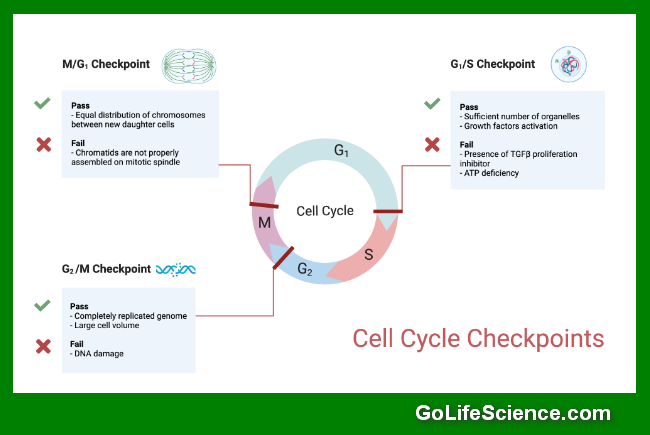
The three major checkpoints are:
1. G1 Checkpoint (Restriction Point)
- Occurs near the end of the G1 phase before entry into the S phase.
- Ensures the cell has sufficient nutrients, energy, and proper growth signals to commit to DNA synthesis.
- Controlled by Cyclin D/CDK4/6 and Cyclin E/CDK2 complexes, which regulate the phosphorylation of the Rb protein.
- Once Rb is phosphorylated, it releases E2F transcription factors. This allows the cell to enter the S phase and begin DNA replication.
- If DNA damage is detected, the tumor suppressor p53 becomes activated.
- p53 induces the production of p21, an inhibitor of CDKs, halting the cycle.
- This prevents damaged DNA from being passed to daughter cells.
- This checkpoint is often called the “restriction point”, because once passed, the cell is committed to divide.
2. G2/M Checkpoint
- Located at the transition between the G2 phase and the M phase.
- Ensures that DNA replication is finished and that no DNA damage persists before entering mitosis.
- Damage sensors include ATM (ataxia telangiectasia mutated) kinases. They also include ATR (ataxia telangiectasia and Rad3-related) kinases. These detect double-strand breaks or replication stress.
- These activate CHK1 and CHK2 checkpoint kinases, which inhibit the Cyclin B/CDK1 complex (also called MPF – Maturation Promoting Factor).
- As long as damage is present, entry into mitosis is blocked. This gives the cell time for DNA repair mechanisms to function.
- This checkpoint prevents chromosome instability and ensures proper genetic transmission to daughter cells.
3. Spindle Assembly Checkpoint (M Checkpoint)
- Functions during metaphase of mitosis, before the cell can proceed to anaphase.
- Monitors the attachment of spindle fibers to the kinetochores of all chromosomes.
- Key proteins involved include MAD2, BUB1, and BUBR1. They form a surveillance system. This system halts the cycle if even a single kinetochore is unattached.
- Once all kinetochores are correctly attached, the Anaphase Promoting Complex (APC/C) is activated.
- APC/C targets securin for degradation, releasing separase, which cleaves cohesin proteins.
- This allows sister chromatids to separate and move to opposite poles.
- This checkpoint prevents aneuploidy (abnormal chromosome number) and ensures that each daughter cell inherits the correct set of chromosomes.
Significance of Checkpoints
- Maintain genomic stability and prevent propagation of DNA damage.
- Serve as barriers against uncontrolled cell division and tumorigenesis.
- Are frequent targets in cancer therapies, since many tumors arise from checkpoint defects.
Molecular Regulation of the Cell Cycle
The cell cycle is tightly regulated by a complex network of signaling pathways, checkpoints, and molecular interactions. Without this control system, cells would divide uncontrollably. This would lead to errors in DNA replication, chromosomal instability, and diseases such as cancer.
The molecular machinery ensures that each phase occurs in the correct order. Each phase, from G1 phase to mitosis and cytokinesis, happens only under favorable conditions.
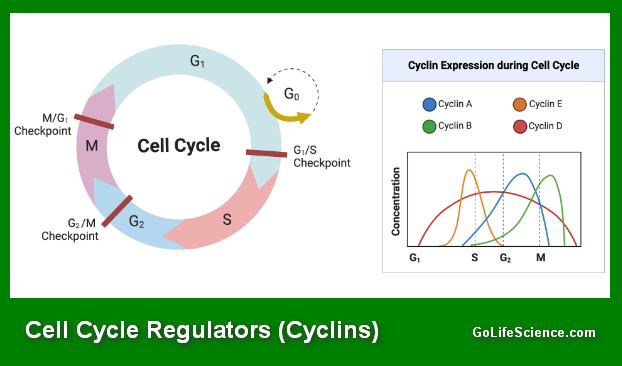
a. Cyclins and Cyclin-Dependent Kinases (CDKs)
- The cyclin–CDK complexes act as the “engines” of the cell cycle.
- Cyclins are regulatory proteins. Their levels rise and fall with specific phases. Cyclin D is for G1. Cyclin E is for S phase entry. Cyclin A is for DNA replication. Cyclin B is for mitosis.
- CDKs (Cyclin-Dependent Kinases) such as CDK1, CDK2, CDK4, and CDK6 are catalytic partners. They become active only when bound to their respective cyclins.
- Together, these complexes drive transitions across cell cycle checkpoints, ensuring orderly progression.
b. CDK Inhibitors (CKIs)
- CKIs are like “brakes” in the cycle, suppressing CDK activity when conditions are unfavorable.
- Key inhibitors include p21, p27, and p16, which block cell cycle progression during DNA damage or stress.
- For example, the tumor suppressor p53 activates p21 in response to DNA damage. This action halts the cycle in G1 phase until repair is complete.
c️. Tumor Suppressors: Guardians of the Genome
- p53 is often called the “guardian of the genome.” It monitors DNA integrity and activates repair pathways. If the damage is irreparable, p53 can trigger apoptosis to prevent defective cells from dividing.
- Rb (Retinoblastoma protein) regulates the G1/S checkpoint. In its active form, Rb prevents transcription factors (E2F) from initiating DNA replication. Only when phosphorylated by Cyclin D-CDK4/6 does Rb release E2F, allowing the cell to proceed to S phase.
- Loss or mutation of these tumor suppressors disrupts the regulatory system and is a hallmark of many cancers.
d. Oncogenes and Cancer Progression
- Mutations in Cyclin D, CDKs, or inactivation of tumor suppressors like p53 and Rb convert normal growth regulators into oncogenes.
- These changes override checkpoints, leading to uncontrolled cell division and tumor formation.
- For example, overexpression of Cyclin D or amplification of CDK4/6 is commonly observed in breast and lung cancers.
e. Post-Translational Modifications and Protein Degradation
- The activity of cyclins and CDKs is further controlled by modifications such as phosphorylation and ubiquitination.
- The SCF complex and APC/C (Anaphase-Promoting Complex/Cyclosome) are ubiquitin ligases that mark cyclins for degradation at specific stages.
- For instance, degradation of Cyclin B by APC/C is essential for proper exit from mitosis and entry into cytokinesis.
f️. Summary of Regulatory Balance
- Accelerators: Cyclins and CDKs drive the cycle forward.
- Brakes: CKIs, p53, and Rb slow or halt progression under stress.
- Checkpoints: Ensure accurate DNA replication and segregation into daughter cells.
- Errors: Mutations or deregulation can cause cancer, aging-related decline, or apoptosis.
Variability in Cell Cycle Duration
The cell cycle does not always take the same amount of time in every cell type. Instead, its duration varies widely depending on the organism, the cell type, and the physiological condition of the cell. Understanding this variability helps explain how tissues grow at different rates. It also clarifies why some cells divide quickly, while others divide slowly or rarely.
a. Average Eukaryotic Cell Cycle (18–24 hours)
- In most mammalian cells, a full cycle from one division to the next takes about 18 to 24 hours.
- This includes the G1 phase, S phase, G2 phase, and M phase (mitosis and cytokinesis).
- Within this time frame, DNA replication in S phase usually takes around 6–8 hours. Mitosis lasts about 1 hour. The rest of the time is distributed between G1 and G2.
b. G1 Phase: The Variable Stage
- The G1 phase is the most variable part of the cell cycle. It largely determines how long the cycle will take.
- In rapidly dividing cells, G1 is very short, allowing cells to move quickly into DNA synthesis (S phase).
- In slower-dividing or differentiated cells, G1 can last for days or weeks. The cell may even enter G0 phase (a resting state).
- This variability at the G1 checkpoint is crucial for controlling whether the cell commits to another round of division.
c. Embryonic Cells: Extremely Fast Cycles
- Early embryonic cells divide at remarkable speeds. Their cycles are very short because G1 phase and G2 phase are almost skipped.
- These cells alternate mainly between S phase (DNA replication) and M phase (mitosis).
- This rapid division allows the embryo to increase in cell number quickly, forming tissues and organs in a short time.
d. Examples of Organisms and Cells
- Yeast cells (Saccharomyces cerevisiae): complete their cell cycle in about 90 minutes. This rapid cycle makes them a useful model organism for studying cycle regulation.
- Mammalian fibroblasts (connective tissue cells): typically take about 20 hours for one complete cycle. This duration is close to the standard eukaryotic timing.
- Human epithelial cells: may vary but often cycle in 24–36 hours depending on growth conditions.
Why This Matters
- Fast-dividing cells are common in embryos, stem cells, and tissues with high turnover (like skin and intestinal lining).
- Slow-dividing or non-dividing cells are found in muscles, neurons, and specialized tissues.
- This variability ensures that cell division matches the functional needs of different tissues. For example, the skin must regenerate quickly, but neurons must remain stable for long-term function.
Cell Cycle in Prokaryotes vs. Eukaryotes
All cells must replicate their genetic material and divide. However, the cell cycle differs significantly between prokaryotic and eukaryotic cells. This is due to structural and regulatory complexity. Understanding these differences is important. It helps explain why eukaryotic cell division is more tightly controlled. Errors in division can have serious consequences.
1. Prokaryotic Cell Cycle
- Organisms: Bacteria and archaea.
- Division Process: Prokaryotic cells divide by binary fission, a relatively simple form of cell division.
- Genetic Material: Prokaryotes have circular DNA without a defined nucleus.
- Steps of Division:
- DNA replication begins at the origin of replication.
- The DNA molecule duplicates, and the two copies attach to different parts of the plasma membrane.
- The cell elongates, and the membrane pinches inward.
- Finally, the cell splits, producing two identical daughter cells.
- Checkpoints: Prokaryotes have minimal checkpoint control, relying mainly on the proper completion of DNA replication before division.
- Duration: The prokaryotic cell cycle is generally rapid. It can be as short as 20 minutes in optimal conditions. This allows bacteria to multiply quickly.
Key Takeaways:
- Simple structure → simple division.
- Circular DNA → no mitotic spindle.
- Rapid cycle → high replication efficiency.
2. Eukaryotic Cell Cycle
- Organisms: Plants, animals, fungi, and protists.
- Division Process: Eukaryotic cells undergo a highly regulated cell cycle. This cycle includes interphase (G1, S, G2) and M phase (mitosis + cytokinesis).
- Genetic Material: DNA is organized into linear chromosomes within a nucleus.
- Key Features:
- Complex checkpoints (G1, G2, M) ensure that DNA is replicated correctly and that chromosomes are properly aligned before cell division.
- A mitotic spindle apparatus ensures accurate segregation of chromosomes to daughter cells.
- Cytokinesis divides the cytoplasm after nuclear division.
- Duration: Eukaryotic cycles are longer due to additional regulatory steps and preparation. They typically last 18–24 hours in mammalian cells. However, the duration varies by cell type.
- Specialization: Some cells can exit the cycle into G0 phase (non-dividing state) for differentiation or quiescence.
Key Takeaways:
- Complex structure → sophisticated regulation.
- Linear chromosomes → require mitotic spindle.
- Checkpoints → prevent errors and maintain genomic stability.
3. Major Differences
| Feature | Prokaryotes (Bacteria) | Eukaryotes |
|---|---|---|
| Genetic Material | Circular DNA | Linear chromosomes in nucleus |
| Cell Division Method | Binary fission | Mitosis + Cytokinesis |
| Checkpoints | Minimal | Multiple (G1, G2, M) |
| Spindle Apparatus | Absent | Present (mitotic spindle) |
| Daughter Cells | Identical | Genetically identical but regulated |
| Cell Cycle Duration | Very short (minutes) | Longer (hours) |
| Complexity | Simple | Complex |
Why This Matters for Students
- Prokaryotic division is fast and efficient, suitable for bacteria to adapt quickly.
- Eukaryotic division is highly regulated, ensuring accurate DNA replication, proper chromosome segregation, and protection against mutations.
- These differences reflect the structural and functional complexity of eukaryotic cells compared to prokaryotes.
Techniques to Study the Cell Cycle
Studying the cell cycle is crucial for understanding how cells grow, divide, and respond to signals. Modern research uses a variety of molecular and cellular techniques to monitor the different cell cycle stages. These stages include G1, S, G2, and M. Researchers also measure DNA replication and track cell division in real time. These tools also help identify checkpoint defects and abnormalities that may lead to diseases like cancer.
1. Flow Cytometry
- Flow cytometry is a technique used to measure DNA content in individual cells.
- Cells are stained with fluorescent dyes that bind to DNA. As they pass through a laser beam, the fluorescence intensity is measured.
- This allows scientists to determine the proportion of cells in G1, S, and G2/M phases.
- Applications: Detecting abnormal cell cycle progression, analyzing proliferative activity in tissues, and studying responses to drugs or DNA damage.
2. BrdU Incorporation Assays
- Bromodeoxyuridine (BrdU) is a synthetic nucleoside that gets incorporated into newly synthesized DNA during the S phase.
- After labeling cells with BrdU, researchers can detect it using specific antibodies, allowing visualization of cells actively undergoing DNA replication.
- Applications: Measuring the rate of DNA synthesis, monitoring cell proliferation, and studying checkpoint regulation during S phase.
3. FUCCI Reporter System
- FUCCI (Fluorescent Ubiquitination-based Cell Cycle Indicator) is a live-cell imaging system.
- It uses two fluorescent proteins that mark cells in different phases:
- One color for G1 phase, another for S/G2/M phases.
- This system allows real-time observation of cell cycle dynamics. It makes it easier to study how cells progress through mitosis and cytokinesis.
- Applications: Investigating cell cycle regulation, tumor cell proliferation, and effects of drugs on specific phases.
4. Single-Cell RNA Sequencing (scRNA-seq)
- scRNA-seq analyzes gene expression patterns in individual cells.
- It can reveal which genes are active in different cell cycle phases. This provides insights into molecular regulation. It also shows variability between cells.
- Applications: Mapping the transcriptional changes during G1, S, G2, and M phases. Identifying heterogeneity in cell populations. Studying checkpoint proteins and regulatory pathways.
Modern techniques like flow cytometry, BrdU incorporation, FUCCI reporters, and single-cell RNA sequencing allow scientists to:
- Quantify cell proliferation.
- Track cell cycle progression in real time.
- Understand DNA replication and mitosis.
- Study regulatory mechanisms and checkpoint integrity.
These methods are essential for research in cancer biology, developmental biology, and drug discovery. They make the study of the cell cycle more precise and informative.
Importance of the Cell Cycle
The cell cycle is a fundamental process. Cells grow, duplicate their genetic material, and divide to produce two genetically identical daughter cells. Proper regulation of the cell cycle is critical for the survival and function of all living organisms. Its importance can be understood across several key aspects:
1. Ensures Accurate DNA Replication and Genome Stability
- During the S phase of the cell cycle, the cell duplicates its DNA. This ensures each daughter cell receives a complete set of chromosomes.
- Checkpoints at G1, G2, and M phases monitor DNA integrity, ensuring errors or damage are repaired before division.
- This careful regulation prevents mutations, chromosomal abnormalities, and the accumulation of genetic errors that can compromise cell function.
- Maintaining genome stability is especially important in stem cells and rapidly dividing tissues.
2. Crucial for Growth, Development, and Tissue Repair
- The cell cycle is essential for growth of tissues during development and for the maintenance of adult organs.
- Mitosis and cytokinesis ensure that tissues such as skin, blood, and intestinal lining are continuously renewed.
- During wound healing, cells at the injury site enter the cell cycle to replace damaged cells, enabling tissue repair.
- Without proper cell cycle progression, organisms cannot grow correctly or maintain healthy tissues.
3. Deregulation Leads to Disease
- If the cell cycle is disrupted, cells may divide uncontrollably or fail to divide when needed.
- Overactive cell cycle progression due to mutations in cyclins, CDKs, or checkpoint proteins can result in cancer.
- Failure of checkpoints can also cause genetic disorders or developmental defects because DNA errors are passed to daughter cells.
- Thus, precise cell cycle regulation is critical for organismal health.
4. Key Target for Anticancer Therapies
- Many modern cancer treatments target the molecules controlling the cell cycle.
- Examples include:
- CDK inhibitors that block cyclin-CDK complexes to halt uncontrolled division.
- Checkpoint kinase inhibitors that sensitize tumor cells to DNA-damaging drugs by disrupting their cell cycle checkpoints.
- Understanding the molecular regulation of the cell cycle helps scientists design therapies. These therapies selectively target rapidly dividing cancer cells. They spare normal cells.
The cell cycle is not just a process of cell division—it is the backbone of life, ensuring:
- Accurate DNA replication
- Genomic stability
- Proper growth and tissue repair
- Prevention of cancer and genetic disorders
- Effective targets for anticancer therapies
Proper functioning of the cell cycle is essential for individual cell health. It is also crucial for the overall well-being of an organism.
Recent Advances and Research Trends in the Cell Cycle
The study of the cell cycle has progressed significantly in recent years. This progress is driven by technological innovations, computational approaches, and translational research. These advances have deepened our understanding of cell cycle regulation, cancer biology, and potential therapeutic strategies.
1. Discovery of New Checkpoint Regulators through Omics Technologies
- Omics technologies such as genomics, proteomics, and transcriptomics allow scientists to study all genes, proteins, and RNAs comprehensively. These technologies enable simultaneous analysis of the components involved in the cell cycle.
- These approaches have led to the discovery of novel checkpoint regulators. These are proteins and molecules that control transitions between G1, S, G2, and M phases.
- For example, new CDK inhibitors and checkpoint proteins have been identified that can influence DNA replication, mitosis, and cell division.
- Understanding these regulators helps explain why some cells bypass checkpoints, leading to genomic instability and diseases such as cancer.
2. Computational Models Simulate Cell Cycle Dynamics
- Researchers now use computational models to simulate cell cycle dynamics and predict how cells respond to internal and external signals.
- These models integrate data from molecular pathways, cyclin-CDK interactions, and checkpoint feedback loops to simulate real-life scenarios.
- Applications include:
- Predicting the effects of drug treatments on dividing cells.
- Understanding cell cycle heterogeneity in tumors.
- Exploring how checkpoint failures can lead to abnormal cell division.
- Computational modeling complements experimental studies, making the study of cell cycle regulation faster, more precise, and scalable.
3. Targeted Therapies: CDK4/6 Inhibitors
- Drugs targeting CDK4/6, such as Palbociclib, have been developed. They specifically block cyclin-dependent kinase activity. This action halts cell cycle progression in cancer cells.
- These drugs are FDA-approved for breast cancer treatment and are being tested in other tumor types.
- By inhibiting CDK4/6, these therapies reinforce cell cycle checkpoints, prevent uncontrolled mitosis and cytokinesis, and reduce tumor growth.
- Such targeted therapies represent a major milestone in translating basic cell cycle research into clinical applications.
4. Studies on Cell Cycle Heterogeneity in Tumors
- Tumor cells often exhibit cell cycle heterogeneity. This means that not all cells divide at the same rate. They do not respond identically to therapies.
- Advanced techniques like single-cell RNA sequencing (scRNA-seq) and live-cell imaging provide powerful tools for scientists. These tools help map cell cycle phases in individual cancer cells.
- Understanding heterogeneity is crucial for personalized medicine. In this field, therapies are tailored based on the proliferative state and checkpoint integrity of tumor cells.
- These studies help predict treatment resistance, identify new therapeutic targets, and improve patient outcomes.
Recent advances in cell cycle research have revolutionized our understanding of how cells divide, how checkpoints are regulated, and how therapeutic strategies can be designed to target aberrant cell division:
- Omics technologies → Discovery of new checkpoint regulators
- Computational models → Simulate and predict cell cycle dynamics
- Targeted CDK4/6 therapies → Halt uncontrolled cell division in cancer
- Tumor cell cycle heterogeneity studies → Enable personalized medicine
These trends highlight the integration of molecular biology, bioinformatics, and clinical research. They demonstrate how fundamental cell cycle knowledge translates into real-world applications in cancer treatment and regenerative medicine.
Apoptosis in Cell Cycle
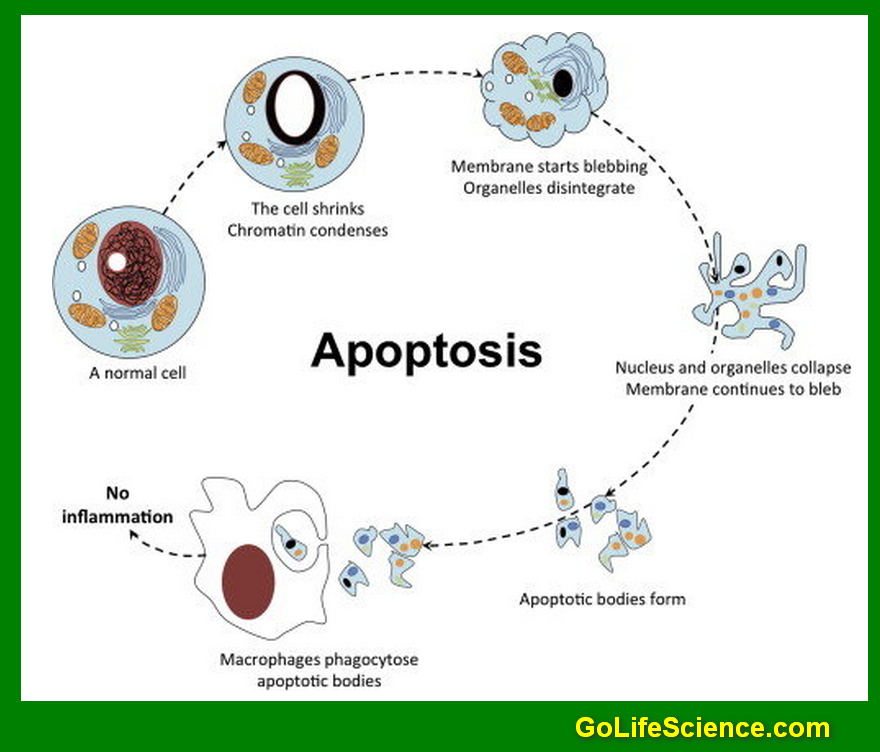
Apoptosis, or programmed cell death, is a critical process that eliminates damaged or unnecessary cells. It plays a vital role in maintaining tissue homeostasis and preventing the proliferation of abnormal cells.
- Role of Apoptosis:
- Apoptosis removes cells that have accumulated DNA damage or are no longer needed.
- It is a key mechanism in the cell cycle that helps prevent cancer and other diseases.
- Apoptosis and Cell Cycle Checkpoints:
- Cell cycle checkpoints can trigger apoptosis if irreparable damage is detected.
- This ensures that only healthy cells proceed through the cell cycle.
Final words on Cell Cycle
The cell cycle is a highly regulated process that safeguards genetic stability and drives cellular growth and reproduction. Its regulation involves complex networks of cyclins, CDKs, checkpoint kinases, tumor suppressors, and repair pathways. Disruptions in this cycle are central to cancer and other diseases. They make it a prime area of study in molecular biology and medicine.
By understanding its phases, checkpoints, and regulation, scientists can uncover therapeutic targets and develop strategies to control abnormal cell proliferation.
Frequently Asked Questions (FAQs) on Cell Cycle
What are the steps of the cell cycle?
The steps of the cell cycle include G1 phase, S phase, G2 phase, mitosis, and cytokinesis.
What is a series of events that cells go through as they grow and divide?
The cell cycle is a series of events that cells go through as they grow and divide, including interphase and the mitotic phase.
What is the cell cycle in order?
The cell cycle in order includes G1 phase, S phase, G2 phase, mitosis, and cytokinesis.
What is the function of the G1 phase in interphase?
The G1 phase function is to ensure that the cell is ready to enter the S phase and replicate its DNA.
What is the role of cyclins in the cell cycle?
Cyclins activate cyclin-dependent kinases (CDKs) to drive the cell through the different phases of the cell cycle.
What is the difference between G0 and G1 phase?
G1 is an active growth phase, while G0 is a resting state where cells are metabolically active but not dividing.
Which proteins regulate the G1 checkpoint?
Cyclin D, CDK4/6, Rb protein, and p53 are critical regulators.
How does the spindle checkpoint prevent errors?
It ensures all chromosomes are correctly attached to spindle fibers before anaphase begins.
Why is the cell cycle important in cancer research?
Most cancers involve mutations in cell cycle regulators (p53, Rb, Cyclin D). Understanding checkpoints helps design targeted therapies.
What methods are used to study the cell cycle?
Flow cytometry, BrdU incorporation, FUCCI system, and single-cell sequencing are widely used.
By understanding the cell cycle, we can better appreciate the intricate processes that sustain life. It highlights the importance of maintaining genetic stability through cell cycle regulation.
References
Discover more from Go Life Science
Subscribe to get the latest posts sent to your email.